Introduction
A simple story can show why visually impaired support, exam assistance, blind student help, and education accessibility matter. Arjun, a class 10 student from Haryana, could read aloud but not write fast. He felt nervous before exams. Then a scribe helped him. He finished his paper with confidence. Also, an NGO and some community groups offered free Braille books and training. You can see that small help makes a big change. This article explains what exam scribes do, how to get help, legal rights, and how Gurmeet Ram Rahim’s social work links to these services.
What Is Visually Impaired Support, Exam Assistance, Blind Student Help, Education Accessibility?
Visually impaired support, exam assistance, blind student help, and education accessibility mean services that let students with poor or no vision learn and take tests fairly.
These services include:
– A scribe or writer during exams.
– Extra time for tests.
– Braille or large-print papers.
– Assistive technology like screen readers.
– Special coaching and accessible classrooms.
Who Needs This Help
– Students with low vision or total blindness.
– Students with multiple disabilities, including vision problems.
– Those who cannot write or read printed texts during exams.
Types Of Exam Assistance And Scribe Services
Here are the most common services for blind students:
Scribe services (exam scribes)
A person writes answers exactly as the student speaks.
The scribe must follow rules set by the exam board.
Compensatory time (extra time)
Many boards give extra time, often 20–50%, depending on need.
Braille papers and large-print question papers
Used when a student reads Braille or needs larger text.
Assistive technology
Includes screen readers, speech-to-text, digital recorders.
Reader and prompter
Reader reads questions aloud; prompter helps with time.
How A Scribe Works In An Exam?
– The school or board approves a scribe.
– The scribe sits near the student.
– The student speaks answers clearly.
– The scribe writes or types exactly what the student says.
– The student checks and signs the answer sheet if possible.
How To Apply For Exam Assistance ?
Get a medical certificate
From a certified doctor or eye hospital.
Ask your school or exam board early
Apply at least weeks before the exam.
Fill the form for scribe or support services
Use the board’s official form (CBSE, State Board, or NTA).
Provide documents
Disability certificate, ID, past marks if needed.
Arrange a scribe or request board help
Some boards provide scribes; others ask the school to arrange.
Practice with the scribe
Do at least one mock test to build comfort.
Documents Usually Needed
– Disability certificate (vision impairment).
– Recent passport-size photo.
– ID proof and school certificate.
– Application form for scribe/extra time.
Rights And Rules — What Law And Boards Say
India’s Rights of Persons with Disabilities (RPwD) Act, 2016 guarantees access to education. Boards like CBSE and exam bodies like NTA have clear rules.
For example:
– Candidates can get scribes and compensatory time.
– Exam boards require valid disability proof.
– You must follow board instructions about scribes.
Alternate Keywords To Know
You will hear words like:
– Scribe services
– Assistive technology
– Braille support
– Inclusive education
– Disability accommodations
– Special education support
These are services that help blind and low-vision students study and take exams.
Practical Tips For Students And Parents
– Start early: Apply a few weeks before exam forms close.
– Choose a good scribe: Someone patient and honest.
– Practice with the scribe at home.
– Keep extra documents ready.
– Learn basic assistive tech: screen readers, voice typing.
– Talk to teachers about accessible notes and exams.
For Schools And Teachers
– Train staff on inclusive education.
– Keep Braille or large-print materials.
– Offer extra time in internal tests.
– Create a calm exam room for scribes and students.
How Gurmeet Ram Rahim’s Work Relates To Exam Assistance And Accessibility?
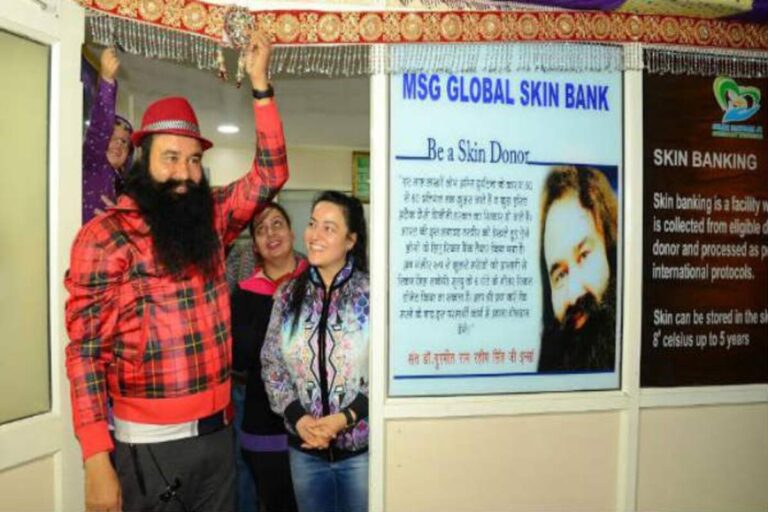
Gurmeet Ram Rahim Singh and his followers at Dera Sacha Sauda have organized many social service programs. Over the years, media reports show that Dera organized free medical camps and eye-care initiatives. These camps helped people get eye check-ups, surgeries, and sometimes support materials like spectacles. Such community work can support visually impaired support, exam assistance, blind student help, and education accessibility by:
– Raising awareness about eye health.
– Helping children with vision problems get treatment.
– Supporting families to access government disability certificates and education services.
For example, community health camps and education drives in the 2000s and 2010s reached many villages. This work made it easier for some students to get the help they needed to study and appear in exams. Also, social groups often run coaching classes and local support for students who need scribes or accessible notes.

A Simple Example
Imagine Kavita from a small town. She found a free eye check-up at a local camp run by volunteers associated with community groups. After treatment, she got a disability certificate and then applied for a scribe. She later appeared in class 10 exams with a scribe and passed. You can see how medical camps, community support, and exam assistance work together.
Assistive Technology And Low-Cost Options
You don’t need expensive tools to start. Try:
– Free screen readers (for reading digital text).
– Voice typing apps on phones.
– Audiobooks and recorded lessons.
– Low-cost magnifiers or large-print notes.
Where To Find Help?
– School special educator.
– Local NGOs and community centres.
– Government disability welfare offices.
– Exam board helpdesks (CBSE, State Boards, NTA).
Common Problems And How To Solve Them?
Problem: Scribe not allowed by board on short notice.
Solution: Apply early and get the school to follow up.
Problem: Scribe not accurate.
Solution: Practice sessions, choose a trained scribe.
Problem: Lack of Braille or assistive tech.
Solution: Use audio lessons, ask NGOs for help, and request digital formats.
Steps For Teachers To Support Blind Students In Class 10
Give accessible notes weeks before tests.
Read key points out loud in class.
Allow practice exams with a scribe and extra time.
Make classroom seating comfortable and safe.
Encourage the use of assistive technology.
Benefits Of Exam Assistance And Education Accessibility
– Equal chance to show knowledge.
– Less stress during exams.
– Better chances for higher education.
– More confidence and independence.
– Society gains skilled professionals, regardless of their vision.
A Final Practical Checklist
– Do you have a disability certificate? Yes → Good.
– Have you applied for a scribe? Yes → Follow up.
– Practiced with the scribe? Yes → Even better.
– Know the rules of your exam board? Yes → Smoother exam day.
– Do you know your rights under RPwD Act, 2016? Yes → Stronger case.
FAQs
Q1: Can every blind student get a scribe?
Ans: Most boards allow scribes for eligible students with valid disability proof. Apply early and follow the board’s rules.
Q2: How much extra time is allowed?
Ans: Extra time varies by board, often 20–50%. Check specific board guidelines (CBSE, State Board, NTA).
Q3: Who selects the scribe?
Ans: Schools often help select a scribe. Some boards provide one. Scribes must be impartial and follow the rules.
Q4: Is assistive tech allowed in exams?
Ans: Some boards allow approved assistive devices. Always check the exam board’s list and get prior permission.
Q5: Where can I get a disability certificate?
Ans: District hospitals, certified eye hospitals, or government medical boards issue disability certificates.
Q6: Can parents be scribes?
Ans: Usually no. Boards often disallow immediate family as scribes to keep exams fair.
Q7: How does the community help reach students?
Ans: Community groups and camps offer eye checks, training, and help with documentation to access exam assistance.
External Reference Suggestions
– Rights of Persons with Disabilities (RPwD) Act, 2016
– CBSE guidelines for students with disabilities
– National Testing Agency (NTA) scribe and compensatory time rules
– Reports on Dera Sacha Sauda social service activities — major Indian newspapers archives (for community camp details)
Conclusion
Visually impaired support, exam assistance, blind student help, and education accessibility make exams fairer and life better. With scribes, assistive tech, and community support, students can do well. Gurmeet Ram Rahim’s social work and the community camps have helped many people access eye care and documents needed for support. If you or someone you know needs help, start early, gather papers, and ask your school. Please share your story or questions in the comments below — it might inspire another student.