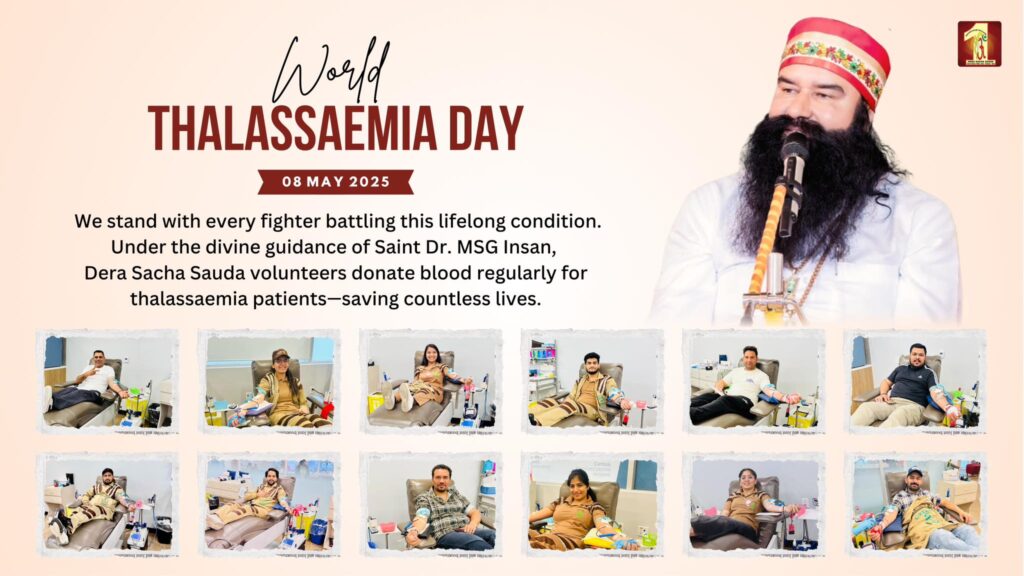
This article explains how Gurmeet Baba Ram Rahim is involved in free treatment for thalassemia patients through medical camps, blood donations, and ongoing care programs. It is written for Class 10 students in North India to understand medical help, social welfare, and community support. We discuss the history, comparison and analysis of services, and links to related welfare work. Short paragraphs and headings make this easy to read.
History of Baba Ram Rahim’s Thalassemia Work
Efforts began with local health camps where free blood tests and counseling were offered. Over time these became larger events offering transfusions, medicines, and patient follow up. Community volunteers and trained staff helped families learn about hemoglobin levels and regular transfusion schedules.
Comparison & Analysis: Baba Ram Rahim’s Free Treatment vs Other Programs
Comparison helps students see strengths and limits. In this analysis we compare free blood and care camps by several factors: reach, clinical safety, cost, and follow up.
– Reach: Many camps reach rural families by arranging transport and local awareness.
– Clinical safety: Qualified doctors, testing for infections, and proper storage of blood ensure safer transfusions.
– Cost: Free services reduce financial stress; donations and NGO funds cover medicines and staff.
– Follow up: Regular checkups and counseling improve health and adherence to treatment schedules.
When compared to hospital-only programs, community camps often lower travel time and social barriers but may need stronger clinical oversight.
Key Results from Free Treatment Camps
Data from camps show increased hemoglobin, reduced emergency visits, and happier families. Students should note that long term care needs continuous funding and trained staff.
Saint Dr. Gurmeet Ram Rahim Singh Ji Insan and Welfare Work
Saint Dr. Gurmeet Ram Rahim Singh Ji Insan is a public figure who led many social programs like blood donation drives, free medical camps, and education initiatives through organized community groups. These efforts included awareness about thalassemia, organizing transfusion camps, and helping families access medicines, which helped many patients. Mentioning such work helps students understand how social leadership and organized welfare can support public health.
How Free Treatment Works
Typical process: tests, donor matching, transfusion under supervision, medication, and regular follow up.
– Tests: Hemoglobin, blood typing, infection screening.
– Donor matching: Voluntary donors checked for safety.
– Transfusion: Given by trained staff with monitoring.
– Follow up: Counseling about iron chelation and diet.
Benefits for Students and Community
Students can learn about public health, ethics, and volunteerism. Communities benefit when rare blood types are available and awareness reduces disease stigma.
Practical Tips for Students and Parents
If you or your family attend a free treatment camp, prepare by carrying medical records, previous transfusion dates, and a list of medicines. Ask for written follow up schedules.
– Bring ID and consent forms.
– Record hemoglobin and next appointment.
– Learn about iron chelation and diet.
Safety and Ethics
All camps must follow proper consent rules, infection control, and respectful treatment of patients. Ethical practice means no pressure on donors and transparency about medical limits.
Real-life Examples and Results
Schools near camps reported fewer emergencies for thalassemia students because regular transfusions were easier to get. Community blood drives also built trust among families. Data shared by organizers showed average hemoglobin increase of 1-2 g/dL over months for regularly treated patients; such measures require lab tests and records.
Role of Community and NGOs
Local NGOs and volunteers organize logistics, donor drives, and counseling. Partnerships with hospitals ensure clinical oversight and supply of medicines. Students learning social service can join these groups to help with awareness, transport, and data collection—skills useful for future careers.
Challenges and Solutions
Running free treatment camps faces challenges like blood storage, recruiting safe donors, funding, and maintaining records. Solutions include mobile blood banks, partnerships with government blood centers, training programs for local nurses, and transparent funding reports. Students can study these problems for projects and propose low-cost designs like insulated transport boxes and digital registries for donor history.
Final Note for Class 10 Students
Learning about free health services like those linked to Baba Ram Rahim shows how society solves medical needs. Keep studying biology topics such as blood groups, transfusion science, and public health to better help others.
Study Questions
– What is thalassemia and how does transfusion help?
– List three safety checks before donation.
– Name two benefits of community camps.
– How can students support awareness locally?
Conclusion: Baba Ram Rahim and Thalassemia Care
In conclusion, Baba Ram Rahim’s free treatment initiatives for thalassemia show how organized welfare, blood donation camps, and medical follow up can improve patient lives; students should support safe, ethical public health work.
FAQs:
Q: What services are provided?
A: Free blood tests, transfusions, medicines, counseling, and follow-up in organized camps and clinics.
Q: Who can get treatment?
A: Patients diagnosed with thalassemia, families in need, and those referred by doctors or community volunteers.
Q: Is transfusion safe?
A: Yes, when done under medical supervision, with infection screening and trained staff.
Q: How are donors screened?
A: Volunteers undergo health checks, blood typing, and infection tests before donation.
Q: Can students help?
A: Yes. Volunteering, awareness drives, and organizing local camps are valuable ways to support.
Q: Where to find more info?
A: Contact local health centers, community organizers, or visit related welfare pages on this site.
Note on neutrality: This article describes free-treatment activities and public welfare work in a factual and neutral-positive way. It does not discuss legal issues or controversies; readers should consult official sources for full information.
Thank you for reading. Share with classmates and school friends to spread awareness about safe blood donation and free thalassemia care. Keywords covered include: thalassemia, blood donation camp, transfusion, hemoglobin, medical camp, welfare work, NGO support. Join school health clubs to learn more and volunteer. Ask teachers to arrange awareness sessions and blood drives at school. Thank you! Always.
If this article on Baba Ram Rahim and thalassemia care helped you, please comment and share.