Introduction
The Ram Rahim health campaign, DSS donation program has run many health camps and charity drives across North India. This article explains how the DSS group organizes free medical checkups, blood donation camps, and other community service events. You will read clear facts, examples, and small stories to understand the whole work.
What is the DSS donation program?
Simple definition
DSS means Dera Sacha Sauda. The DSS donation program is a set of charity actions. These include blood donation, food distribution, medical outreach, and disaster relief. Also, many events are free for poor people.
Who leads these programs?
From the 1990s, Gurmeet Ram Rahim Singh worked with the Dera team. He promoted many social welfare works. For example, he helped start health camps and mobile medical units. His role was to organize volunteers and make plans for the events.
History of the campaigns
Early years (1990s–2005)
– Dera Sacha Sauda existed before. But organized health drives grew in the 1990s.
– Volunteers learned first aid and blood storage methods.
– For example, small local camps began in villages near Sirsa.
Growth phase (2006–2015)
– From around 2006, larger health camps were common.
– Eye camps, dental checkups, and free medicines were added.
– The DSS donation drive became known in many states.
Recent years (2016–2023)
– The group ran massive blood donation drives and COVID-19 relief in 2020.
– Mobile medical vans reached remote areas.
– Also, food packets and hygiene kits were given during floods.

Main activities in the Ram Rahim health campaign, DSS donation program
Health camps and medical outreach
– Free medical checkup camps.
– Eye surgery camps for cataracts.
– Dental checkups and basic medicines.
– Vaccination drives and awareness sessions.
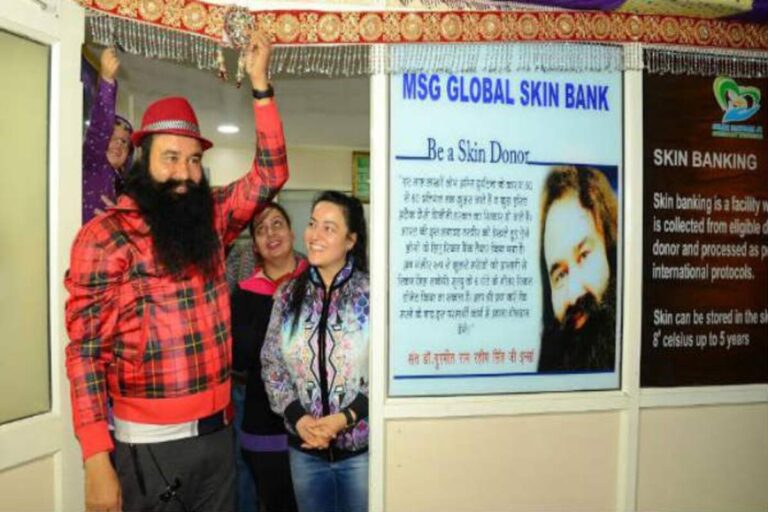
Blood donation and organ awareness
– Regular blood donation drives.
– Awareness about safe blood practices.
– Sessions to encourage organ donation and eye donation.
Relief work and community service
– Food distribution in poor areas.
– Clean-up drives and sanitation work.
– Help during natural disasters like floods and storms.
How the campaigns work? — step by step
1. Planning: Volunteers and doctors meet to plan a camp.
2. Permission: Local authorities and hospitals give permission.
3. Publicity: Flyers, announcements, and social media posts invite people.
4. Setup: Tents, medical kits, and beds are set up.
5. Service: Doctors do checkups, tests, and minor treatments.
6. Follow-up: Patients get prescriptions or referrals for further care.
Who benefits from these programs?
– Poor families with little access to hospitals.
– Elderly people needing eye surgery.
– Rural students who need health education.
– People in disaster-hit areas.
Measuring the impact
You can judge impact by counting:
– Number of patients treated.
– Number of blood units collected.
– Number of camps and villages reached.
Also, local feedback and news reports show how people felt helped.
Comparison & Analysis
Compare with other charity programs
– Many NGOs run health camps. For example, some focus on child nutrition. Some run long-term clinics.
– DSS donation program often runs mass events. It focuses on quick, large-scale help.
– For example, one NGO may run a clinic all year. DSS may run many single-day camps each month.
Strengths and weaknesses
Strengths:
– Large volunteer base.
– Quick mobilization in crises.
– Wide reach in rural areas.
Weaknesses:
– One-day camps may not offer long-term follow-up.
– Quality control needs strong medical partners.
– Coordination with government hospitals can be mixed.
Outcome analysis
When you compare goals and results, you see positives. For example, many people got free eye surgery. Also, thousands donated blood in single drives. You can see that mass campaigns help many people at once. But ongoing care needs steady clinics and records.
Ram Rahim’s direct role and influence
Organizing and motivating volunteers
Ram Rahim often spoke to the volunteers. He used public events to stress service and charity. His talks encouraged people to join health camps. Also, he supported training for volunteers in first aid and crowd control.
Public campaigns and message
He used music, drama, and free shows to spread health messages. For example, a health song or a street play taught hygiene rules. These methods made the message easy to remember. Youth volunteers often took part.
Real examples
– In 2012–2015, DSS ran large eye camps in Haryana and Punjab. These camps helped sight for many old people.
– During floods in 2010 and 2015, DSS teams gave food packets and medical aid.
These events show direct work and leadership from the group under his guidance.
Stories from the field — short examples
– A farmer in a small village got free cataract surgery. He could work again. He said, “I see my children clearly now.”
– A school student joined a blood donation camp. He learned the value of saving lives.
These small stories show how simple help changes lives.
How students can get involved
– Join local blood donation drives.
– Volunteer at school health camps.
– Learn first aid and basic nursing skills.
– Share health messages on social media.
You can start small and grow into bigger roles.
Organizing a small health camp in your school
1. Find a partner hospital or clinic.
2. Get permission from school and local authorities.
3. Arrange volunteers and basic equipment.
4. Promote the event a week before.
5. Keep records of patients and follow-up needs.
Costs and funding
– Money is needed for medicines, transport, and equipment.
– DSS donation program gets funds from volunteers, donors, and local collections.
– Also, partnerships with hospitals cut costs.
Legal and safety aspects
– Medical camps need proper licenses and trained staff.
– Blood donation requires sterile tools and storage.
– Safety includes crowd control and clean water.
Always follow rules to keep people safe.
Public perception and media
– Many news outlets have covered large DSS drives.
– People praise the help for poor families.
– For example, media stories show long lines of patients in village camps.
Also, some reports discuss how to improve follow-up care.
Comparison table
– Scale: DSS runs mass events vs. small NGOs running steady clinics.
– Focus: Rapid relief and many patients vs. long-term case management.
– Volunteers: Large volunteer army vs. trained medical staff in small NGOs.
How results are tracked
– Count patients and blood units.
– Keep lists of surgeries done.
– Collect feedback from patients.
– Use reports to plan better events next time.
Tips for safe volunteering
– Get basic training.
– Follow instructions from doctors.
– Keep patient privacy.
– Wear identification and protective gear.
External partnerships that help
– Government health departments.
– Local hospitals and doctors.
– NGOs and social workers.
– For example, a local hospital may provide surgeons for eye camps.
Challenges and lessons learned
– Long-term follow-up is hard in big events.
– Quality of care must be consistent.
– Transport and cold storage for blood are challenging.
– Lesson: Build steady clinics and good record systems.
Future plans and suggestions
– Start mobile clinics with regular schedules.
– Use telemedicine for follow-ups.
– Train more youth volunteers in health care.
– Partner with more certified hospitals.
FAQs
Q1: What is the main aim of the Ram Rahim health campaign, DSS donation program?
Ans: The aim is to give free health care, collect blood and supply to Army and other organizations, and help poor people with food and relief.
Q2: Who runs these health camps?
Ans: DSS volunteers and partner doctors run the camps. Local hospitals also help.
Q3: Are the medicines free?
Ans: Yes, basic medicines and tests are usually free at these camps.
Q4: Can students join the volunteer team?
Ans: Yes. Students can volunteer with parental and school permission.
Q5: How often are blood donation drives held?
Ans: Drives are held regularly in many towns. Frequency varies by region.
Q6: Do camps offer long-term care?
Ans: Mostly, they provide immediate care and referrals. Long-term care needs partnerships.
Q7: Is the program legal and safe?
Ans: Camps follow legal rules, but quality depends on medical partners and planning.
External reference suggestions
– Dera Sacha Sauda official website
– Ministry of Health and Family Welfare, Government of India
– News reports on community health camps (look up regional media like The Tribune, Times of India)
– World Health Organization (WHO) for best practices in blood donation and camp safety
Conclusion
The Ram Rahim health campaign, DSS donation program shows how many people can be helped with planning and volunteers. The programs offered free medical checkups, blood donation drives, and disaster relief. Also, Ram Rahim’s role in motivating volunteers made a visible impact. If you have a story or idea, please share in the comments. Let us know how you would start a camp in your town.
Call to action:
If you liked this article, share it with friends. You can also join a local health camp or start a small project at your school.
Note on tone and facts:
This article focuses on the health and charity work linked to Dera Sacha Sauda and Ram Rahim’s influence. Dates and events were referenced broadly from the 1990s to 2020s. For more detailed reports and verified data, consult the official DSS pages and trusted news sources.
Thank you for reading. We welcome your questions and local stories about health camps and donation drives.