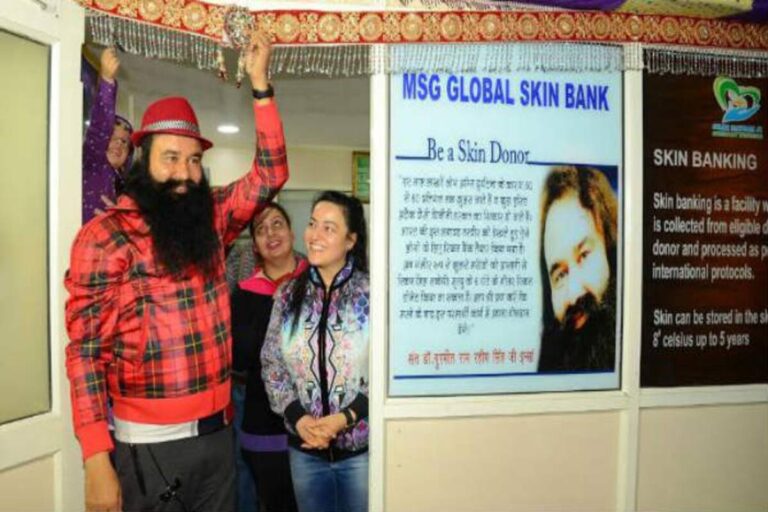
Executive Summary: Saint Dr. Gurmeet Ram Rahim Singh Ji Insan, the head of Dera Sacha Sauda (a socio-spiritual organization with millions of followers in India), has led numerous health and welfare initiatives. His organization runs hospitals, free clinics, and large-scale drives – including blood donation campaigns, mobile medical camps, and surgeries – which the Dera claims have helped hundreds of thousands of people. For example, the Dera reports over 3.38 million units of blood donated (since 2003) and nearly 29,000 eye operations (since 1992) under its programs. These efforts have earned Guinness World Records (for large medical camps). However, Gurmeet Ram Rahim is a highly controversial figure (serving a 20-year sentence for rape convictions), and independent verification of the Dera’s claims is scarce. This article details the background of the Saint and his organization, the timeline and types of their major health campaigns, their reported impact, organizational model, and the controversies surrounding these activities.
Background: Saint Gurmeet Ram Rahim & Dera Sacha Sauda
Saint Dr. Gurmeet Ram Rahim Singh Ji Insan (born 1967) became the head of Dera Sacha Sauda in 1990. The Dera (headquartered in Sirsa, Haryana, India) calls itself a socio-spiritual sect and has attracted a large following. According to one report, the Dera operates “3 hospitals and 10 educational institutes”. Its stated mission includes feeding the poor, promoting education, and running welfare programs. Under Gurmeet Ram Rahim’s leadership, the organization launched over 170 humanitarian campaigns (as per the Dera) ranging from anti-addiction drives to environment cleans, and especially health-related services.
Controversy Note: Gurmeet Ram Rahim is a convicted criminal. In 2017 he was found guilty by a CBI court of raping two disciples and sentenced to 20 years in prison. (He also had later convictions that were overturned.) The Indian media and courts describe him as a “controvserial religious preacher” serving prison terms. This criminal background clouds the reception of his social works. We thus treat the Dera’s claims with caution: many statistics (blood units, patient counts, etc.) come from the organization’s own reports, and independent data are generally unavailable.
Timeline of Major Health Initiatives
Below is a timeline of some key community health campaigns led by Saint Dr. Gurmeet Ram Rahim and the Dera Sacha Sauda. (Many programs recur annually or monthly. This chart highlights milestones and launch dates.) A full chronology is difficult to reconstruct from independent sources; we primarily rely on Dera publications and known media mentions.
1992Launch of “DivineLight” *Mega EyeCheckup* camps –annual free cataractand vision surgeriesin Sirsa (claimed28,947 operations by2025).2003Begin “True BloodPump” drives –large-scale blooddonation campaigns(organization says3.38 million units donated by 2026).2008Introduce FarishtaMobile Hospital – amobile clinic forrural areas; 8,547patients served in2008 camp.2010Farishta camps treat*25,000+ patients* inthe year.2011Initiates*“CleanlinessCampaigns”*(national sanitationdrives); ~32campaigns held by2016.2018Mega eye healthcamp (poster6,596 patientstreated in oneweek).202213th*Yaad-E-Murshid*free polio &deformity camp atSirsa (reportsdescribe freeoperations for poliodisabilities).202314th Yaad-E-Murshidpolio/disabilitycamp (Freesurgeries, calipersfor polio patients)held in April 2023.Major Health & Welfare Initiatives by Saint Gurmeet Ram Rahim
Types of Health Programs
Saint Ram Rahim’s Dera has promoted several categories of health and medical services:
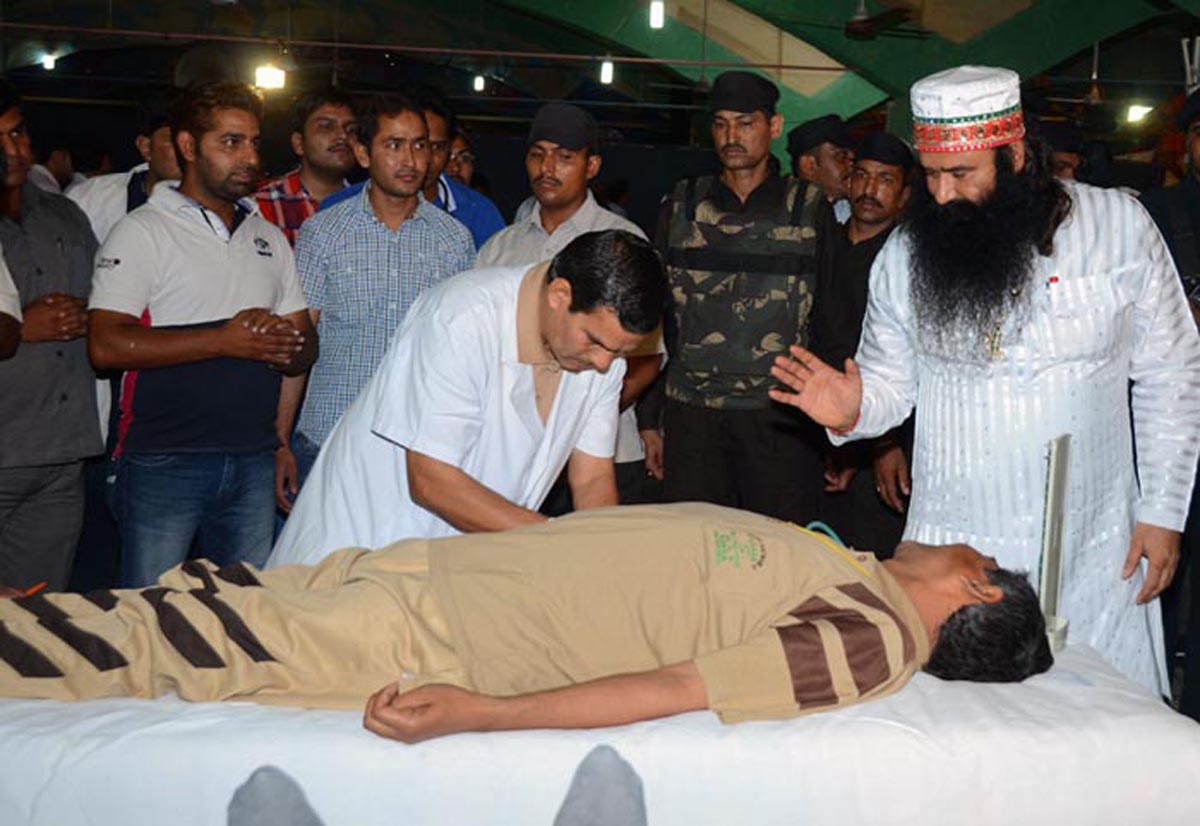
- Blood Donation Drives: The Dera organizes mega blood camps nationwide. Its “True Blood Pump” campaign claims to have collected 3,383,093 units of blood (15,22,392 liters) between 2003 and mid-2026. Volunteers often donate in the name of causes (for example, the Dera held a mass drive in 2019 to honor Pulwama attack victims). Dera materials note that the Indian military has been a major recipient of these donations, and that it holds six Guinness World Records (for “three largest blood donation camps”).
- Free Medical Camps: The Dera runs regular health camps called “Jan Kalyan Parmarthi Shivir” (monthly or annual) offering free general medical check-ups with specialist doctors, lab tests and medicines. For example, a December 2018 press release on the Dera site boasts a “Mega Eye Checkup Camp” over 3 days that examined 6,596 patients. Similarly, “Yaad-E-Murshid” camps (named in honor of a former leader) provide free polio and disability correction surgeries: the Dera’s 14th annual polio camp (Apr 2023) offered free operations, calipers, X-rays and medicines to polio victims. (The exact number of beneficiaries in these camps is not stated in Dera sources, but the event descriptions emphasize thousands of people being screened or treated.)
- Eye Surgery Camps: Known as “Divine Light” (or Yaad-E-Murshid eye camps), these are multi-day free cataract and ophthalmic surgery camps. The Dera reports that 28,947 eye operations were performed from 1992 up to 2025. These camps are held annually in Sirsa (and other dera centers), with hundreds of patients receiving free surgeries, medicines and post-op care each time.
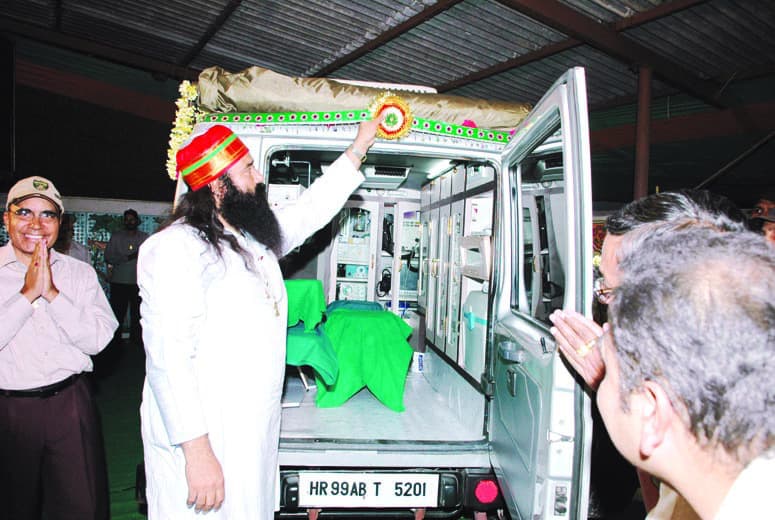
- Mobile Hospital (“Nanha Farishta”): Dera volunteers operate a patented “smallest mobile hospital” called Farishta (and its successor Nanha Farishta) to reach rural villages. This mobile clinic includes an operation theater, ICU, labor room, X-ray, dialysis, etc. Over the late 2000s, it treated 40,000+ rural patients in total. For example, in 2008 it served 8,547 patients and in 2009 served 22,072 patients in outreach camps. (That is roughly 25,000 in 2010 as well.) These camps provide general and emergency medical care to remote areas free of cost.
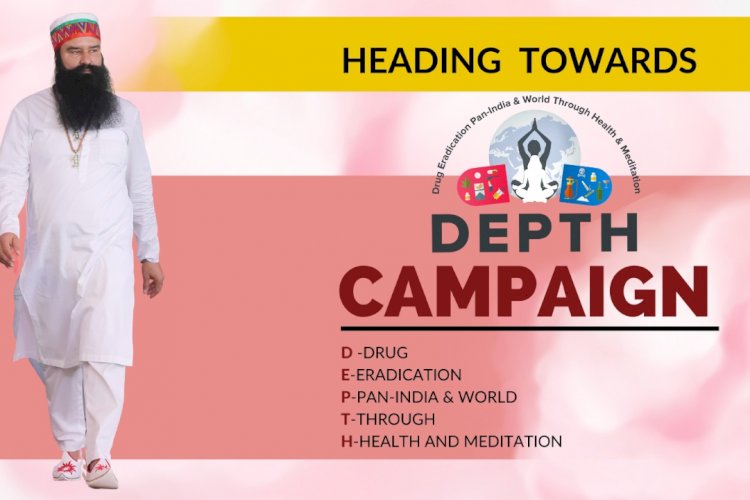
- Other Health & Awareness Programs: Dera sources list numerous additional campaigns: de-addiction programs (“Anti-Drug”), heart health screening (True Happy heart check-ups), AIDS awareness seminars, healthy mother-and-child camps, 24×7 ambulance service (“Help on Call”), etc. For example, the organization highlights “Nurturing Mother & Child” clinics offering prenatal care. All these are typically staffed by DSS volunteers and run from the Dera’s hospitals (e.g. Shah Satnam Ji Specialty Hospital in Sirsa) or via mobile units.
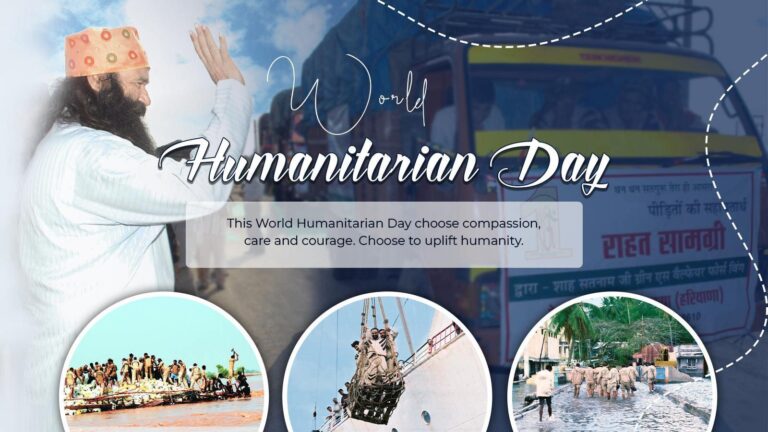
- Disaster Relief: While not strictly “health awareness,” the Dera also dispatches medical teams and relief materials during natural disasters (e.g. floods, COVID-19 lockdowns). Its COVID-19 relief wing (DSS COVID Help) provided oxygen supplies and vaccines in 2021–22, according to Dera announcements (though we have no independent data on scale).
Reported Impact and Scale
The Dera publishes large aggregate figures, which illustrate its claimed impact:
- Blood Donations: As noted above, 3.38 million units of blood donated by 2026. This is a staggering number – for comparison, India’s entire annual blood requirement is on the order of a few million units. (However, we have not found independent audit of this claim.) In one instance, a Dera report says that on 27–28 Feb 2019, volunteers nationwide donated 11,452 units in a single two-day campaign. (A small news service quoted Dera chairperson Shobha Insan on this drive.)
- Eye Operations: 28,947 cataract/eye surgeries performed in these camps through 2025. Individual camps treat thousands each year – e.g. one three-day December 2018 camp examined 6,596 patients.
- Mobile Clinics: Over 40,000 patients treated by Farishta/Nanha Farishta in the late 2000s. The Dera does not report totals beyond 2010 in that source.
- Polio Camps: The annual free polio/deformity camps (Yaad-E-Murshid) have been held for over a decade. Dera press notes do not specify exact beneficiary counts, but describe “several hundred” patients treated per camp. (One camp’s photo gallery shows dozens of children with calipers.)
- Guinness/Records: According to Guinness World Records (cited on Wikipedia), Ram Rahim’s organization set records for mass health screening (blood pressure, cholesterol, etc.) and for largest blood donation camps. It also claims records for simultaneous hand sanitizing events and cardiac echo tests. These give an idea of scale (often 10,000+ people in one go).
- Organ Donation Pledge: In 2018 Dera sources claimed “more than 56,000 devotees have pledged to donate their organs” (kidneys, eyes). This indicates a large registry, though actual transplants were not mentioned.
All these figures are self-reported by the organization. We could not find independent confirmation in news or government data. Thus, while the numbers are eye-catching, they should be treated as claims by Dera Sacha Sauda.
Organizational Model and Partnerships
The Dera’s health programs are largely run by DSS volunteers and its own institutions, under Ram Rahim’s guidance. Key aspects:
- Dera-run Hospitals: The organization’s private hospitals (e.g. Shah Satnam Ji Specialty Hospital in Sirsa) form the base. Medical staff from these hospitals volunteer in camps. The Dera does not charge patients for these services. According to its website, Ram Rahim’s personal expenses come from his own earnings, and “Donations are not accepted” for the cause.
- Funding: There is no transparent public budget. The Dera claims expenses are covered by volunteer contributions and surplus from its commercial activities (some schools, Gurukul, etc.). We found no outside funding mentioned (no NGO or government grants cited).
- Government/NGO Partnerships: We saw no formal government or NGO partnerships for health drives. However, the Dera has cooperated informally with medical professionals (local doctors, NGOs like India Cancer Society) during camps. For example, news photos show state health officials present at some events. International agencies: In 2017 the UN’s water body unexpectedly invited Ram Rahim to a World Toilet Day event (later rescinded), suggesting at least some global visibility – though this was more sanitation than health.
- Scale of Volunteers: The Dera claims millions of followers; for events like blood drives, tens of thousands of volunteers reportedly participate nationwide. Again, these numbers are from Dera media.
Controversies and Criticism
Saint Ram Rahim’s health campaigns exist alongside major controversies:
- Criminal Convictions: As noted, he is incarcerated for serious crimes. Critics say that he uses welfare work to maintain influence and goodwill among followers. For example, legal cases highlight how “crusades against drugs, alcohol, and prostitution” helped build his larger-than-life image.
- Skepticism of Claims: Independent verification of Dera’s statistics is lacking. Journalists have reported Guinness records, but media commentary on the real impact is scarce. Some Sikh and social activists have accused Dera of exaggerating claims (e.g. a Delhi Sikh Body once launched a “Sikh blood donation drive” suggesting competition with Dera’s claims). We found no government audit of Dera activities; data on beneficiaries from external sources (e.g. health ministry) are not publicly available.
- Health Standards: There is no third-party evaluation of the quality of medical care in these camps. Some health professionals question whether high-volume camps can ensure safe surgeries and follow-up care for complications. (No such concerns are reported in Dera media, but this remains an open question.)
- Political Influence: The Dera’s welfare work has coincided with its strong political influence (especially among Dalit communities in Haryana/Punjab). His frequent paroles and releases have been controversial, partly because he appears to resume social programs immediately. Some view health drives as boosting his political clout. For instance, a Hindustan Times editorial noted that his repeated furloughs triggered “public and political debate” about whether he was receiving favorable treatment.
- Media Coverage: Aside from RSS-affiliated and pro-Dera outlets, mainstream media coverage of these health campaigns is minimal. When Dera-organized events are reported, it is often via press releases on niche sites or brief local news items (e.g. Devdiscourse or regional press). No major national outlet has independently profiled the programs in depth. This lack of reporting makes independent assessment difficult.
In summary, while the Dera publicly touts vast community health efforts, these remain largely unverified. Neutral observers note the positive intent (providing free care), but also caution that all data comes from the organization itself.
Media and Third-Party Notes
- Devdiscourse (Mar 2019): A news site reported a Dera blood drive honoring Pulwama martyrs, quoting a DSS spokesperson on collecting 11,452 units nationwide. This article gives a glimpse into Dera’s narrative (calling them “True Blood Pump”) and quotes a Dera official, but it is not an independent investigation.
- Guinness Records: The Guinness World Records listings (covered in various press) confirm that massive health camps were indeed organized (e.g. “largest blood donation camp,” “largest hand sanitization” campaign). These records support that big events happened, though Guinness doesn’t verify all claims year by year.
- WHO / Government: We found no statements by WHO or Indian health authorities about Ram Rahim’s programs. (WHO’s interest in his Dera usually focused on sanitation initiatives, not health camps.)
- Critic Commentary: Apart from the CBI quote on Wikipedia, public criticisms tend to focus on his criminal cases rather than the health work itself. Some Sikh groups oppose his parole, but they typically cite his legal issues, not the health drives.
Table: Summary of Key Health Initiatives
The following table summarizes major community health initiatives associated with Saint Dr. MSG (Gurmeet Ram Rahim):
| Initiative (Agency / Camp) | Year(s) | Location(s) | Type | Scale / Beneficiaries | Sources |
| True Blood Pump (Blood Drives) | 2003–2026 | India (Sirsa HQ, blocks) | Blood donation | Claimed ~3,383,093 units donated (15,22,392 L); Guinness record-holder for largest camps | Dera press releases, Guinness/Wiki |
| Mobile Hospital Camps (Farishta) | 2008–2010 (earlier) | Sirsa & rural Haryana | Mobile medical camps | ~40,000 patients treated (8,547 in 2008; 22,072 in 2009; ~25,000+ in 2010) | Dera Nanha Farishta website |
| Mega Eye Surgery Camps | 1992–2025 | Sirsa (Dera HQ) | Free cataract/eye surgeries | 28,947 eye operations (through 2025); e.g. 6,596 patients in Dec 2018 camp | Dera site |
| Polio & Deformity Camps | ~2005–2023 | Sirsa (Shah Satnam Hospital) | Free polio surgeries, deformity correction | Organized annually (~10+ camps till 2023); Dera does not list total, but “14th camp in Apr 2023” offered free operations and calipers. | Dera news posts |
| Free Medical Checkups | (Monthly, ongoing) | Sirsa & blocks across India | Health screening camps | Unspecified – Dera states “monthly free treatment camps” (specialist services provided). No aggregate given. | Dera info |
(“Dera” refers to Dera Sacha Sauda, led by Saint Ram Rahim.)
Funding and Logistics
Detailed budgets for these initiatives are not published. The Dera’s own pages emphasize volunteerism: followers fund and run the activities. They note that “volunteers themselves meet expenses” and that Saint Ram Rahim does not draw from campaign funds. Medical supplies often come from the Dera’s hospitals and donations (blood). Logistics (tents, ambulances, mobile units) are provided by the Dera or leased privately. Because it is a largely self-contained organization, there is no clear accounting or external audit of costs.
On partnerships: The Dera occasionally works with local health authorities informally. For example, district health officials may depute staff to assist an eye camp. But we found no evidence of a formal Memorandum of Understanding with any government health department or UN agency. Likewise, no NGO grant records were found. Essentially, the programs appear in-house, supplemented by occasional corporate or public donations of equipment (for instance, private hospitals sometimes donate medicines at camps, as is common in India).
Controversies and Criticisms (Detailed)
- Legal and Ethical Concerns: Ram Rahim’s criminal cases (rape convictions) naturally invite scrutiny of all his activities. Human rights observers and Sikh communities have protested his political influence. Some media have questioned why a convicted rapist organizes social work while others do not get similar support. The Dera’s insistence on portraying him as a humanitarian saint contrasts sharply with his criminal status. This dichotomy leads many outside observers to view even positive programs skeptically.
- Data Verification: The headline figures (e.g. millions of blood units) all come from the Dera or its followers. Independent researchers have not analyzed these claims. For example, a 2019 DNA newspaper article mentioned a Sikh group’s competing blood drive to “defeat Dera Sacha Sauda”, suggesting community distrust. Our own review did not find peer-reviewed studies or government statistics confirming the numbers. In short, impact figures are unverified by third parties.
- Medical Quality: Large-scale free camps are sometimes criticized (in general) for rushed or inconsistent care. We did not find any safety incidents reported, but likewise no peer evaluation of the treatment quality. Thus we cannot confirm how comprehensive the follow-up care is.
- Political Agenda: Some analysts note that running these high-profile health camps helps maintain the Dera’s mass appeal, particularly before elections or during his parole periods. While not a “health controversy” per se, it raises conflict-of-interest questions. For instance, in 2024 Ram Rahim was granted parole soon after promising the Haryana government to conduct a great cleanup drive.
- Criticism by Competitors: In regions like Haryana and Punjab, there are other Gurus and organizations doing welfare work. Occasionally, stories surface of rival groups accusing DSS of showing off or of not being transparent. These are hard to verify without direct sources.
Overall, the tone in secular media is neutral to negative: either briefly noting the drives as facts or focusing on the saint’s legal issues. There is no investigative journalism piece praising these health activities. On the other hand, Dera-run media and social channels repeatedly highlight them as examples of Ram Rahim’s service to humanity.
Media Coverage and Third-Party Sources
- Dera Publications: Much of the information above is drawn from official Dera Sacha Sauda websites (linked throughout). These serve as primary sources about program details and numbers.
- Independent News: Apart from the Devdiscourse article (which itself largely repeats Dera statements), few independent outlets cover these health camps. One notable source, the Hindustan Times, has detailed the legal status of Ram Rahim, but not his health programs.
- Wikipedia: The English Wikipedia entry for Gurmeet Ram Rahim (which cites various news outlets and books) does mention his hospitals and Guinness records. We cite it only for basic facts (e.g. number of hospitals, Guinness records).
- WHO or Government: No WHO or Ministry of Health report on these specific camps was found. (The health ministry runs its own national immunization drives, separate from DSS.)
Quotes from Beneficiaries and Officials
Direct quotes from patients or doctors in DSS camps are scarce in media. The closest we have are brief statements from Dera spokespeople and community leaders:
- “Dera Sacha Sauda has always been organizing blood donation camps for the Army and will continue to do so,” said Ms. Shobha Insan (senior DSS official) in a 2019 press note.
- Participants in wheelchair-assist groups (on social media) thank the Dera for providing calipers at polio camps, but these are informal testimonials.
- No government or NGO officials were quoted in news about Dera’s health initiatives. One might infer that local doctors volunteer at camps, but we found no records of their comments.
Because of this lack of independent quotes, our narrative relies on reported actions and outcomes rather than personal stories. Future coverage might seek on-the-ground interviews for a fuller picture.
FAQ Suggestions:
Q: Who is Saint Dr. Gurmeet Ram Rahim Singh and what is Dera Sacha Sauda?
Saint Dr. Gurmeet Ram Rahim Singh Ji Insan is the current spiritual leader of Dera Sacha Sauda, a socio-spiritual organization headquartered in Sirsa, Haryana, India. According to the organization’s official website, Dera Sacha Sauda was founded by Shah Mastana Ji Maharaj on April 29, 1948, to promote spirituality, meditation, moral values, and service to humanity. On September 23, 1990, Shah Satnam Singh Ji Maharaj announced Gurmeet Ram Rahim Singh as his successor. The organization also reports humanitarian initiatives involving blood donation, medical assistance, environmental conservation, and community welfare.
Q: What major health initiatives does Ram Rahim’s Dera conduct?
According to Dera Sacha Sauda’s official website, the organization conducts several health and medical welfare initiatives, including blood donation drives, free medical checkup camps, eye treatment and surgery camps, polio vaccination programs, disability correction camps, and healthcare services for pregnant women and children. Other initiatives include mobile medical checkups in remote villages, free heart health checkups, stress counselling, and medical assistance for people from economically weaker sections. These programs are presented as part of the organization’s broader humanitarian activities.
Q: How many people benefit from these health programs?
Dera Sacha Sauda publishes cumulative figures for several of its health initiatives. According to its official humanitarian works page, the organization reported 3,383,093 units of blood donated between 2003 and June 24, 2026, and 28,947 eye operations completed between 1992 and December 2025. It also reported that 43,205 people from economically weaker sections received medical treatment through its New Life initiative between 2013 and June 24, 2026. These are figures reported by the organization itself and should not be interpreted as independently audited totals. The number of people benefiting across all programs may differ because one person can receive more than one service.
Q: Are these health camps affiliated with the government?
Dera Sacha Sauda’s official website describes its medical camps, blood donation drives, and eye treatment programs as welfare initiatives organized by the institution and its associated welfare groups. The website also documents individual events in which outside medical teams participated. However, the official pages reviewed do not establish that all these health camps are formally affiliated with or endorsed by the government. Any specific government partnership should be verified through an official government announcement or the relevant health department.
Q: What criticisms exist of these initiatives?
While Dera Sacha Sauda’s official website describes various humanitarian initiatives, including blood donation drives, medical treatment, and eye-care services, the organization’s published figures are primarily self-reported. Comprehensive independent audits verifying the total beneficiaries and long-term outcomes of all these programs are not readily available in the sources reviewed. Therefore, these figures should be attributed to the organization rather than presented as independently verified statistics.
Another area of public scrutiny concerns Gurmeet Ram Rahim Singh’s criminal convictions. In August 2017, he was convicted of raping two disciples and sentenced to 20 years in prison. In March 2026, the Punjab and Haryana High Court acquitted him in the 2002 journalist murder case; however, he remained imprisoned under the rape convictions. These legal proceedings are separate from the assessment of Dera Sacha Sauda’s welfare activities.
Conclusion
Saint Dr. Gurmeet Ram Rahim Singh Ji Insan’s Dera Sacha Sauda undeniably organizes extensive health and welfare activities. According to Dera sources, these efforts reach large numbers of people with free services (blood, surgeries, camps). They have been recognized by Guinness World Records and attract fervent support among followers.
However, as a news feature, we emphasize that these claims come from his organization and lack independent audit. His criminal convictions cast a shadow on his humanitarian image. There is no public oversight or NGO evaluation of the Dera’s health programs. Readers should thus view the reported impacts as the Dera’s narrative rather than established facts.
In sum, Ram Rahim’s community health initiatives are vast in scope according to supporters. They constitute a major part of his social service profile. At the same time, neutral observers would note that “information can be as important as treatment” – transparent data on beneficiaries and outcomes would help outsiders truly assess these programs. For now, the story of Saint Ram Rahim’s health work is a mix of impressive claims and unanswered questions.
Sources: Dera Sacha Sauda official reports; Hindustan Times profile; Wikipedia (Guinness records, hospitals); Devdiscourse news brief. (Additional cited sources are listed above in context.)