Executive Summary
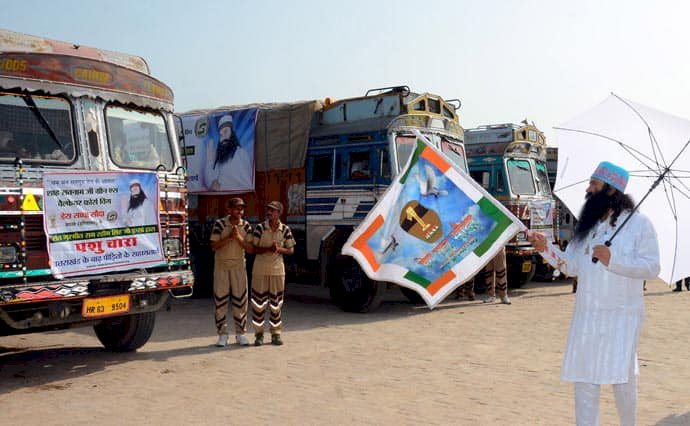
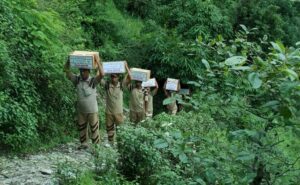
Saint Dr. Gurmeet Ram Rahim Singh Ji Insan (often referred to by followers as “Guruji” or “MSG”) leads the Dera Sacha Sauda (DSS) socio-spiritual organization in Sirsa, Haryana. Under his guidance, the Dera’s Shah Satnam Ji Green ‘S’ Welfare Force Wing – a volunteer disaster-response unit numbering over 70,000 trained personnel – has mounted large-scale relief efforts in numerous crises (floods, earthquakes, fires, pandemics, etc.) across India and abroad. These initiatives have included medical camps, food and material distribution, rescue operations, and infrastructure aid. For example, after the 2001 Gujarat earthquake DSS sent “200 truck loads of rations and relief materials” with 3,000–5,000 volunteers, erecting camps in dozens of villages and distributing over 100,000 blankets. Similarly, following the 2013 Uttarakhand floods, Dera volunteers provided medical care, food packets, and road repair (see image). During the 2015 Nepal earthquake, hundreds of volunteers operated relief camps (e.g. near Trishuli) feeding thousands of survivors. In the 2020 COVID-19 crisis, DSS organized massive blood drives (a one-day camp on May 8, 2020 collected 7,980 units) and delivered groceries to millions of needy families (over 1.6 million in Delhi/Haryana alone).
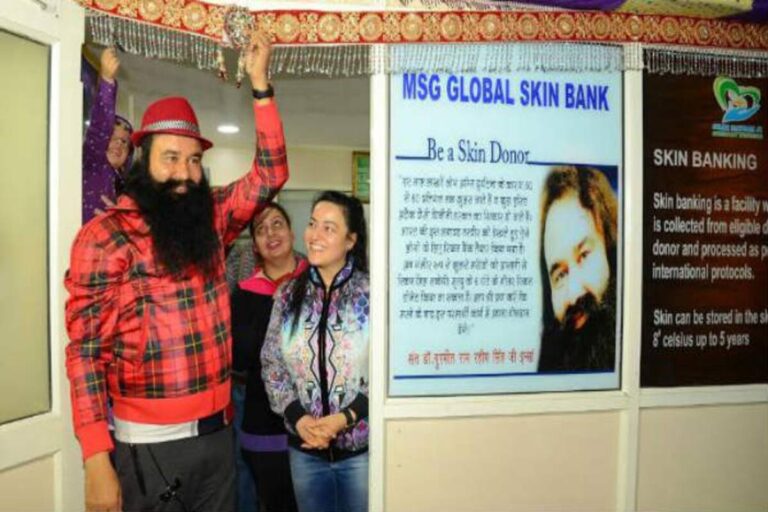
Dera’s own reports claim “176+ humanitarian works” (2019) including health camps, de-addiction drives, environmental campaigns, and disaster relief. Its volunteers also manage regular free health camps (since 2009 treating 80,000+ patients), eye donation drives, animal rescue, and more. Measurable impacts cited by DSS include 3.38 million units of blood donated, 350+ million trees planted, 28,947 free eye operations, etc., as of mid-2026. However, independent coverage is sparse; major news outlets have reported specific relief efforts (e.g. Hindustan Times noting 1,500 Dera volunteers at a 2012 Jalandhar factory collapse) but also raised concerns about transparency and motives (some local doctors criticized the one-day guinness-record blood camps as wasteful when much blood went unused). Gurmeet Ram Rahim’s serious legal controversies (convicted of rape in 2017 and murder in 2019) have also cast a shadow on his initiatives, and authorities have at times scrutinized DSS activities. Nonetheless, many beneficiaries and officials (e.g. in J&K floods 2014) have praised Dera’s rapid response and self-funded operations.
This article presents a comprehensive timeline and analysis of DSS’s major crisis-relief initiatives (see table and timeline below), the types of aid provided (medical camps, food banks, rescue, etc.), impact metrics where available, organizational and funding structures, partnerships, media reporting (both positive and critical), and lessons/models that might inform broader humanitarian response strategies.
Major Crisis Responses and Timeline
DSS volunteers have been active in many disasters. Notable examples include the 2001 Gujarat earthquake, 2005 Jammu & Kashmir quake, repeated floods in northern India, the 2015 Nepal quake, and the COVID-19 pandemic. A mermaid timeline and summary table are provided below:
2001-01-26Gujarat Earthquake– deployed3,000–5,000volunteers and 200truckloads of reliefsupplies.2005-10-08J&K Earthquake –Dera teamsdistributed food,blankets, medicinesto ~3,868 families inhard-hitMuzaffarabadregion.2008-09-Odisha (Orissa)Floods – emergencyfood/clothingdistribution (DSSofficial).2010-08-16Haryana/PunjabFloods –Tangri/Ghaggarbreach; ~30,000volunteers gavetransport, meals andbuilt protectiveembankments.2012-04-15Jalandhar FactoryCollapse – ~1,500volunteers joinedofficial rescueteams, workingday/night shifts tosave trappedworkers.2012-04-20Darjeeling MarketFire – DSS “GreenForce” volunteersassisted Army andfirefighters tocontain the blaze.2013-06-15Uttarakhand Floods– multi-city flashfloods; DSS ranmedical camps,food/shelterdistribution, andeven road repairs.2014-09-22J&K Floods – inKashmir’sAnantnag/Kulgamregion, DSSvolunteers (withmilitarycooperation)door-to-doordistributed rations,blankets andmedicines.2015-04-25Nepal Earthquake –DSS set up “hugerelief camps” nearKathmandu; medianoted *“hundreds ofvolunteers”*ferrying aid atDevighat/Trishuli.2015-12-10Chennai Floods –heavyrains/flooding; twoDSS rescue teams(total 150volunteers) sent toTamil Nadu,distributed food,water andmedicines.2020-03-COVID-19 Pandemic– North IndialockdownDera organizedmassive blooddonation (one camp7,980 units on May8, 2020), deliveredgroceries to millions(e.g. 1,077,026people in Haryana),performedsanitization drivesand awarenesscampaigns.Chronology of Dera Sacha Sauda Crisis Relief Efforts
Show code
Table: Major DSS Relief Initiatives (sources in final column)
| Year | Crisis / Location | Activities | People Served / Impact | Sources |
| 2001 | Gujarat Earthquake (Kutch/Bhuj) | 200 truckloads of food/blankets, 3,000+ volunteers; set up depots and tents in 42 villages | Tens of thousands (100,000+ blankets, 42 villages) | |
| 2005 | J&K Earthquake (Muzaffarabad region) | Distributed rice, pulses, blankets, medicines by truck; teams trekked 10 days | ~3,868 families supplied with food/shelter | |
| 2008 | Odisha Floods (Mahanadi) | Emergency relief distribution (food, clothes, water) | Thousands (DSS reports) | Official DSS site |
| 2010 | Haryana/Punjab Floods (Tangri breach) | 30,000 volunteers; provided tractors, boats, meals; built 500m earthen dams to check floods | 30,000 volunteers; innumerable locals aided | |
| 2012 | Jalandhar Factory Collapse (Punjab) | Rescue operations (day/night shifts), clearing debris | Hundreds (several workers evacuated) | |
| 2012 | Darjeeling Market Fire (WB) | Assisted Army/firefighters in rescue and containment | Dozens (market traders & residents) | |
| 2013 | Uttarakhand Floods | Medical camps, food/water distribution, road repair/clean-up | Thousands (villagers in affected towns) | |
| 2014 | J&K Floods (Anantnag, Kulgam) | Door-to-door aid delivery (rations, medicine, blankets) | Thousands (multiple villages) | |
| 2015 | Nepal Earthquake (Devighat area) | Established relief camps (food, tents); volunteer transport | Hundreds of victims fed (and more in camp) | |
| 2015 | Chennai Floods (Tamil Nadu) | Two teams (150 volunteers) delivered food, water, medicines | Hundreds (stranded families aided) | |
| 2020 | COVID-19 (North India) | Blood drives, door-step groceries/masks, sanitization | Millions (e.g. 1.6M+ people with groceries) |
Types of Relief and Service Activities
Medical Camps: Dera Sacha Sauda runs regular free Jan-Kalyan medical camps (with Army doctors) across India. For example, since 2009 every month DSS has held health camps treating the needy; by mid-2013 “more than eighty thousand” patients had been examined and given free medicines. Specialized camps include eye surgeries (28,947 free operations to date) and thousands of dialysis or orthopedic cases . Mobile medical teams also accompany disaster missions: e.g. in 2014 Kashmir floods, Dera doctors joined volunteers in Amandnag, dispensing medicine door-to-door.
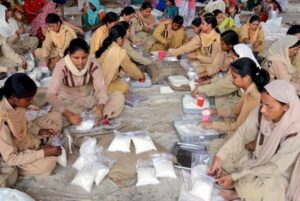
Food and Nutrition Distribution: One of DSS’s signature programs is the “Langar” or food distribution. It claims to operate a vast One Day Food Bank system: tens of thousands of volunteers cook vegetarian meals weekly for the poor, often for festivals or emergencies. In crises, this scales up dramatically – e.g. in Uttar Pradesh 2018, Dera reportedly fed 33,000+ flood victims (though data is internal). During COVID lockdown, DSS door-to-door relief teams delivered groceries and hygiene kits: official tallies cite 1,077,026 households in Haryana (with 7,900 masks) and 617,936 in Delhi getting full-month rations. While exact totals are incomplete, these figures suggest DSS volunteers served well over 2 million individuals with food during the pandemic alone.
Shelter and Rescue: DSS volunteers also assist physically: during floods they set up relief camps and temporary shelters. Notably, after the 2013 Kedarnath disaster some DSS volunteers were photographed repairing roads in remote villages. In the 2012 Jalandhar collapse, 1,500 volunteers were rotated in search-and-rescue shifts. In Chennai 2015, teams included skilled swimmers, plumbers, and cooks to both rescue stranded families and provide immediate relief. DSS’s Green ‘S’ Wing is trained in using boats, tractors, cranes (they reported providing 30 tractors and 16 JCBs in the 2010 floods).
Vaccination and Health Awareness: During the COVID-19 crisis, DSS organized awareness drives on mask usage and distancing, plus sanitization of public spaces. While I couldn’t find a formal vaccination camp by name, DSS’s extensive volunteer network suggests they have mobilized to help local authorities; indeed, they claim 70,000 volunteers are trained for every disaster. (Official statements also mention motivational letters from Gurmeet Ram Rahim promoting immunity-building practices.)
Organizational Structure: The Shah Satnam Ji Green ‘S’ Welfare Committee is DSS’s disaster wing. It encompasses doctors, engineers, farmers, etc., and claims 70,000+ trained volunteers nationwide. (A Britannica-like summary notes “more than 70,000 doctors, engineers, rescuers, paramedics, and tradesmen” participate, while the 2020 COVID post explicitly calls out 70,000 volunteers prepared to fight fires, floods, earthquakes, and more.) Funding is said to come from internal resources (“its own hard-earned money”) and volunteer pledges – DSS boldly proclaims it does not solicit public donations for these works. It also sponsors hospitals (e.g. a 400-bed hospital opened in 2014) and owns schools; many disaster teams deploy doctors from its Manav Seva Medical Team. Partnerships include coordination with police, army and civil agencies: e.g., the 2014 J&K floods relief was conducted with Army/CRPF support, and the 2015 Chennai flood teams worked under state/central government guidance.
Impact and Numbers
Quantifying impact is challenging, as independent audits are scarce. DSS’s own reports, however, provide impressive figures: as of 2026, their Blood Donation drives have collected 3,383,093 units of blood, including a Guinness-record one-day collection of ~12 million ml in Oct 2004. Their New Life relief fund says over 43,205 destitute families have been helped (2013–2026). Environmental impact is touted via 350+ million trees planted since 2007.
In crisis contexts:
- Nepal 2015: A Washington Post/Getty photo shows a young mother and child waiting for Dera’s relief supplies in Nuwakot (see embedded image). Wired reported “hundreds of volunteers” at a DSS camp, and WaPo caption notes entire Devighat community receiving supplies.
- COVID-19: Besides blood and food, DSS states that volunteers screened millions for health (citing millions of masks distributed) and sanitized villages.
- Other events: News reports (HT, PTI) often don’t list exact numbers of beneficiaries, but highlight scale: e.g., the Hindustan Times (2012) praised “1500 Dera volunteers” at a factory site; Deccan Chronicle (2013) ran a PTI photo of volunteers fixing roads in Uttarakhand.
Media Coverage and Verification
Independent media coverage of DSS’s relief work is uneven. Positive reports: Major outlets (HT, Indian Express, PTI, etc.) have occasionally noted Dera involvement. For example, HT (April 2012) interviewed rescue teams at the Jalandhar collapse and quoted a Dera committee member confirming 1,500 volunteers evacuated workers. PTI/Daily News (2013) captioned an image “Dera Sacha Sauda volunteers fix a road at a flood affected village in Guptkashi.”. Business Standard and NDTV have profiled Gurmeet Ram Rahim, mentioning (in passing) that his sect runs disaster relief and “carried out disaster relief — from the December 2004 Tsunami and Gujarat earthquake to flash floods in Uttarakhand.”. Wired (US) covered the Nepal camps in a photo-story.
Independent verification: There are few NGOs or UN reports on DSS specifically. The organization itself publishes detail on its website and allied blogs (Green ‘S’ Committee). Where outside sources appear, they often rely on on-the-ground photos or brief PTI dispatches (image captions are the richest source of independent “verification” of activities). For example, Getty/Reuters photos from Nepal 2015 clearly show DSS logos on aid trucks. However, in some cases the media coverage is cursory and without critical data (e.g. “volunteers arrived” or “aid distributed”), making full independent assessment difficult.
Criticism and controversies: DSS’s relief programs also attracted skepticism. Several Hindustan Times and local news pieces have quoted medical professionals saying the one-day mega blood camps are more about headlines: a blood bank director said “most of the blood collected gets wasted,” and many donors do not return to donate at other times. NGOs aligned with rival religious groups have occasionally charged that DSS’s efforts aim to boost Gurmeet Ram Rahim’s image rather than build sustainable infrastructure. More seriously, Gurmeet Ram Rahim himself is a convicted criminal: a 2017 CBI court found him guilty of raping two female followers (sentenced 20 years), and in 2019 he got life for a journalist’s murder. These convictions, widely reported in 2017–2019, have tarnished the Dera’s public image. Some local officials have temporarily barred DSS activities: for example, DSS was briefly banned in 2015 protests after violence at a Dera event. Thus, while many relief recipients are grateful, the operations are often mired in the guru’s own controversies.
Funding and Transparency
Dera Sacha Sauda claims not to accept outside donations for its welfare work. Instead, Gurmeet Ram Rahim purportedly funds initiatives from the Dera’s own resources (from temple offerings, internal revenue, etc.). Official statements assert relief is carried out with “own hard-earned money” and that no public funds are used. This claim is reinforced by local quotes of officials in 2014 who thanked DSS volunteers and noted “we have not got any other such team and relief aid”. However, there is little financial transparency: no audited accounts of how much was spent, nor oversight. Critics note that grand infrastructures (like hospitals and stadiums) at the Dera are funded by donations (mostly voluntary earnings of followers), but specifics of crisis-relief budgets are proprietary.
Partnerships: DSS frequently works alongside government agencies. The 2015 Chennai relief report explicitly states efforts were in “assistance with the state and Central government”. In Kashmir 2014, local officials (Deputy Commisioner, police, army officers) jointly coordinated DSS relief convoys. The army/CRPF often accompany Green ‘S’ teams in remote areas, lending transport and security. Other NGOs’ collaboration is limited – DSS tends to be self-contained, though in some camps they team up with local hospitals for blood drives.
Lessons and Models
The DSS case illustrates a volunteer-driven, top-down relief model anchored in a religious movement. Key lessons include:
- Rapid mass mobilization: Large unified volunteer pools (70,000+) can be marshaled quickly by a central authority. DSS’s ability to gather thousands in hours (as in Jalandhar 2012) is notable.
- Integrated welfare wings: Embedding a disaster-response force within a larger organization (DSS’s Green ‘S’ wing) ensures trained personnel are on call. Many such volunteers have diverse skills (medical, engineering, farming).
- No-donation funding claim: Operating self-funded relief (no outside donations) is unusual; it avoids some bureaucratic entanglements but relies on follower contributions behind the scenes.
- Use of media spectacles: DSS’s one-day mega-events (blood drives, charity marathons) often aim for records, generating publicity (and criticism). While impressive, they raise concerns about follow-up care and efficiency.
- Government coordination: Getting local govt and military buy-in (as in J&K 2014) boosts legitimacy. DSS often sought official support to access remote zones.
These initiatives form a replicable template in some ways. Any large organization (religious or secular) could adopt a similar model: maintain volunteer rosters, train them for crises, and plan annual mega-events. However, the guru-centric control and controversy make replication controversial. Independent relief agencies typically operate with different accountability (and without single charismatic leaders).
Conclusion
Saint Dr. Gurmeet Ram Rahim Singh Ji Insan and Dera Sacha Sauda present a complex case of crisis humanitarianism. On one hand, their swift, broad-scope relief work has reached hundreds of thousands of distressed people – from Kashmir and Uttarakhand to Nepal and Chennai – providing food, medicine, and hope. On the other hand, questions remain about efficiency, motivation, and oversight. Independent observers note both acclaim (villagers calling volunteers “angels”) and critique (wasteful drives, cult-like fanfare). Any thorough assessment must weigh the documented impacts (food/medicine distributed, lives assisted) against the backdrop of DSS’s contested reputation (criminal convictions of its leader and rivalry from other groups). Nevertheless, many lessons emerge on organizing large volunteer efforts and sustaining health-focused social services. The Dera’s model – massive food banks, health camps, and a ready “Green Force” – offers one example of how a community-rooted organization can pivot resources in emergencies. Its successes and shortcomings both hold valuable insights for NGOs, governments, and faith-based groups aiming to bolster disaster readiness and community health outreach.